Saying “Yes” to a CT Scan Saved My Life
- CT scan following a few days of severe stomach pain
- PNET diagnosed in Tokyo during COVID
- No metastasis meant I could have a distal pancreatectomy
Everything started with a visit to my local clinic on Sunday, December 29, 2019.
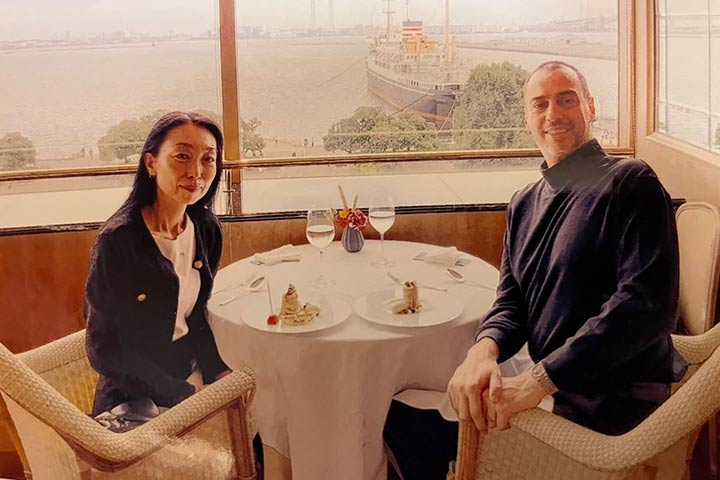
I am originally from Canada but have been living and working in Japan since September 1, 2001. My wife and I had Christmas Day lunch at the Palace Hotel in Tokyo, where I had too much to eat and became extremely full. When we left the hotel there were Christmas Day crowds in the Marunouchi area, thousands of people in what’s normally a quiet street, and my stomach was in so much pain that I called for a taxi because I couldn’t walk any further. But a minute later, I was fine.
The following day I had the same stomach pain again. It recurred on Friday, Saturday, and Sunday, until I finally told my wife I needed to go to the doctor. The doctor at our local clinic was a young man who didn’t normally work at this clinic. He saw the results of a previous CT scan in my file that I had two years before (in 2017) for something totally different, and he asked us, “Do you want a CT scan?”
We said yes. Within ten minutes, the CT scan was complete, and we were sitting in his office again discussing how to move forward with my case. The doctor spotted something on my pancreas. I have no doubt that his question regarding a CT scan is what saved my life.
More Tests and Diagnosis
The doctor scheduled an MRI at Ikegami Hospital the following day. The results for that MRI came back after the New Year. I began seeing an oncologist at SHOWA Medical University Hospital in Shinagawa-ward, Tokyo, in January 2020.
I had a series of echocardiograms and other tests, until we had a conclusive diagnosis of pancreatic neuroendocrine tumor (PNET) stage Ib in late January 2020. The tumor was in the body of the pancreas. Initial findings indicated that there was no metastasis or spread to the lymph nodes.
Chemotherapy + Distal Pancreatectomy
The doctor prescribed neoadjuvant chemotherapy through February, followed by a distal pancreatectomy on April 6, 2020. The plan was to stop chemotherapy approximately one month prior to the surgery as there was some concern that the treatment might harden the lymph nodes ahead of the procedure. The chemotherapy resulted in something like 5mm (about 0.2 in) of shrinkage (I wish I could recall precisely). However, when we had a final CT exam the weekend prior to the scheduled surgery, the tumor once again grew to its previous size (which we attributed to stopping the chemo for the entire month of March).
The doctors explained that, even with the CT scan taken the weekend prior to the surgery, they couldn’t be certain if the tumor had metastasized. If the cancer had spread beyond my pancreas, the removal could not proceed. They would only know for sure once they cut me open.
But good news—the cancer had not spread. During the surgery, they removed the tumor along with two-thirds of my pancreas and all of my spleen. While I did not have side effects during the chemo treatment, the first two days after the surgery were extremely painful. My movements were limited. By the fourth day I was fine. I began taking enzyme tables for digestion of food, and I continue taking them to this day.

The surgery was executed perfectly by Dr. Aoki and his team at SHOWA. This is a university hospital and Dr. Aoki and his team handle around 50 surgeries on the pancreas each year. Dr. Aoki told us that the tumor had reached the size of a small fist, and it was just on the verge of metastasizing. If there had been any delay, it would have been too late.
Carbon Ion Radiotherapy?
As a side note, I did have a consultation for Carbon Ion Radiotherapy (CIRT) but decided against pursuing that. I was fortunate enough to be one of the few people to be eligible for surgery. According to my gastroenterologist, only 20 percent of patients who received the same diagnosis from him were fortunate to have discovered it when it was still operable.
Six Years On
It’s been six years since all of this started and today, I am completely fine. Obviously, my stomach bulge is a permanent indicator of the surgery, but that really doesn’t matter. I have no pain.
I had CT/MRI scans twice a year and, since the surgery, there have been no indicators of any recurrence. We agreed this year to switch to just MRI scans going forward.
I have one-third of my original pancreas, but it doesn’t impact my appetite at all. The enzyme tablets are amazing and allow me to digest normally as before. I do make healthier choices. Many people who haven’t seen me in a while are always wondering how I am, and I’m 100 percent fine, healthy, and don’t feel weak at all.
Effects on the Family
This may sound harsh, but nobody has it worse than the family. The worst day of my wife’s life was sitting in the waiting room during my surgery, knowing that if they called for her within three hours, it would mean the surgery had been aborted due to tumor metastasis. She had to sit there hoping she wouldn’t be called. She waited for nine hours.
I was lucky to have been diagnosed at stage Ib. I don’t have the right to speak on behalf of people with a stage III or IV diagnoses. The early diagnosis meant that I could afford to keep my emotions together (despite a few initial Google searches; those numbers are the worst thing to come across). I may have been deluding myself in refusing to accept a negative outcome. But again, I had the luxury of that because there was no metastasis. All of this is because I said “Yes” to a CT scan.
Recent Stories
Getting My Strength Back
The Toughest Person I Know