Seven Tips to Navigate the Caregiver Learning Curve
Caregivers are often thrust into a role they never anticipated—and one they feel ill-equipped to perform.
Often overnight, they’re tasked with understanding complex medical terminology, managing appointments and medications, tracking symptoms, and communicating with their loved one’s medical team—all while confronted with their own fear, grief, and uncertainty.
“It’s like being dropped into a foreign country without knowing the language,” says Patricia Gambino, a gastrointestinal nurse navigator at Penn Pancreatic Cancer Research Center (Philadephia, Pennsylvania). That sense of being overwhelmed and disoriented is a defining feature of the caregiver learning curve, especially in the early days after diagnosis.
The Overwhelm Is Real
A pancreatic cancer diagnosis triggers a cascade of tests, scans, genetic testing, and specialist visits, compressed into a short time period. To complicate matters, when you’re in a high-stress state, your brain is less equipped to process complex information.
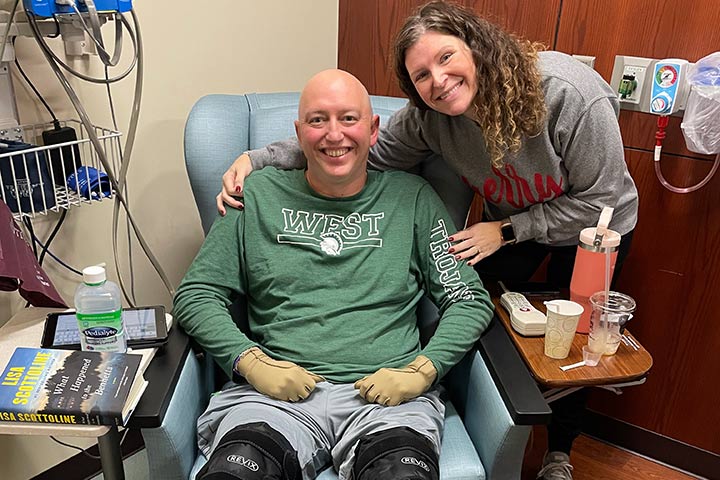
“Pancreatic cancer has a reputation for being aggressive. As caregivers, we feel like we’re racing against the clock,” says Brooke Dwars, whose husband, Ryan, was diagnosed with pancreatic cancer at 36 years old.
As an outreach coordinator for the burn unit at University of Iowa HealthCare (Iowa City), Dwars understood how hospitals work, how to talk to clinicians, and how to advocate for the best care. But even with that background, she was paralyzed by fear. “You’re scared, you’re flooded with information, and you don’t know what you don’t know,” she explains.
As Dwars navigated the learning curve, she quickly learned that not all information is helpful. A simple online search can lead caregivers down rabbit holes of outdated statistics, anecdotal claims, or overwhelming survivor stories.
What helped was finding vetted, science-based resources that evolved with her family’s needs. Early on, diagnosis-focused organizations helped her understand the basics. Later, she sought out platforms like Let’s Win that offered deeper insight into emerging treatments, clinical trials, and practical guidance.
“I needed information I could trust,” she adds. “And I needed it in pieces I could actually absorb.”
Those resources became lifelines—not only for knowledge, but for preparing questions ahead of appointments and advocating more effectively for Ryan.
Seven Ways to Regain a Sense of Control
While the learning curve can feel impossibly challenging, there are practical steps you can take to steady yourself and move forward with more clarity:
- Learn the vocabulary. A critical first step is to learn the basic vocabulary of the disease—not to become an oncologist, but to feel less lost. Search reliable organizations including Let’s Win, Pancreatic Cancer Action Network (PanCAN), the Lustgarten Foundation, and the American Cancer Society for plain-language primers on staging, genetics, and treatment options.
- Ask the right questions. Pancreatic cancer is complex, and even well-meaning providers may not have the tools to address every nuance. Once you understand the basics, you’re better equipped to ask about things like pancreatic enzyme replacement therapy (PERT), genetic testing and next generation sequencing, clinical trials, and supportive therapies. “Patient portals like MyChart can help you address non-urgent questions and gain clarification about test results and side effects—if the patient authorizes caregiver access,” nurse navigator Gambino says.
- Control what you can. In the early days after a diagnosis, there’s a lot of uncertainty—appointments, testing, results. But some things remain within reach. “You can’t control test results or timing, but you can control your nutrition. You can encourage your loved one to exercise. You can take on more responsibilities so your loved one can rest,” notes Dwars. And be proactive with your loved one’s medical team about managing side effects. “It’s best to get ahead of the symptoms before they worsen and become more difficult to treat,” adds Gambino.
- Take notes. Step into the role of record keeper—during appointments and at home. Writing down new terms, questions, and explanations not only helps with recall, but also offers a sense of control. “Tracking symptoms such as vomiting, bowel changes, appetite, nausea, and fevers helps the medical team monitor patterns over time,” explains Lauren Shaffer, a licensed clinical social worker who often works with cancer patients in New York City. “That log may become an important tool in guiding treatment decisions.”
- Get support. Caregiving can be isolating, but the learning curve becomes more manageable when you ask for support. Enlist friends and family members to research specific topics and report back. Connect with an ambassador or fellow caregiver who is farther along. “And don’t be afraid to consult your medical team for a referral to a psychologist or social worker,” says Gambino.
- Seek professional assistance. Many caregivers are unaware of the resources available to them. Depending on the hospital and region, you may have access to social workers, nurse navigators, dietitians, chaplains, and patient advocates—professionals who can help with everything from emotional and financial support to insurance questions and managing side effects.
- Don’t sideline self-care. The most overlooked part of the caregiver learning curve is recognizing that as a caregiver, you need care too. “Sidelining your own health is a fast track to burnout. And it makes you a less effective caregiver,” Gambino emphasizes. Check in with your physician, monitor your sleep and nutrition, build in coping mechanisms (things like exercise, meditation, lunch with friends), and take regular breaks from caregiving.
The Gift of Time
Caregiving for pancreatic cancer is usually sudden, disorienting, and emotionally intense. But the learning curve, while steep, is not insurmountable. With time, support, and a willingness to take everything in stride, one step at a time, you can build the knowledge, confidence, and resilience needed to support your loved one—and yourself.
Years after Ryan’s diagnosis, Dwars says the learning curve never fully flattens. New treatments, side effects, and emotional challenges—including survivor’s guilt—continue to emerge.
But what does change is confidence. “You stop feeling completely lost,” she says. “You learn the language. You learn where to go for help. And you learn that it’s okay not to have all the answers right away.”
Recent Stories

How to Communicate with Medical Experts When You’re the Caregiver

Choosing My Happiness