Treatments
555 articles

Taking a Look At FAK Inhibitors
Dr. Conan Kinsey is looking at how FAK inhibitors can make immunotherapy more effective in combination with chemotherapy.

DIRECT Study Focuses on NanoKnife Technology
Dr. Daniel Holzwanger is part of the NanoKnife irreversible electroporation (IRE) study for stage III pancreatic cancer patients.

Damage as a Way to Repair Pancreatic Cancer
Dr. Talia Golan takes a closer look at the damage caused by the BRCA1/2 mutations to find a way to treat pancreatic cancer.

New NCCN Guidelines Stress Genetic Testing For All Pancreatic Cancer Patients
Genetics impact your treatment for pancreatic cancer. Dr. Sapna Syngal discusses the recommendation of genetic testing for all pancreatic cancer patients.
Testing the Safety of an Immunotherapy Combination After Surgery
A new clinical trial tests the safety of a monoclonal antibody and personalized cancer vaccine plus chemotherapy after surgery to remove pancreatic cancer.

Using AI to Create a Better Test to Predict Pancreatic Cancer Progression
Dr. Dan Theodorescu is using AI to isolate more effective biomarkers than the CA 19-9 test to track pancreatic cancer progression.

Multi-Site Precision Promise Study Opens
Dr. Vincent Picozzi explains how Precision Promise clinical trial will use a personalized approach for pancreatic cancer patients.
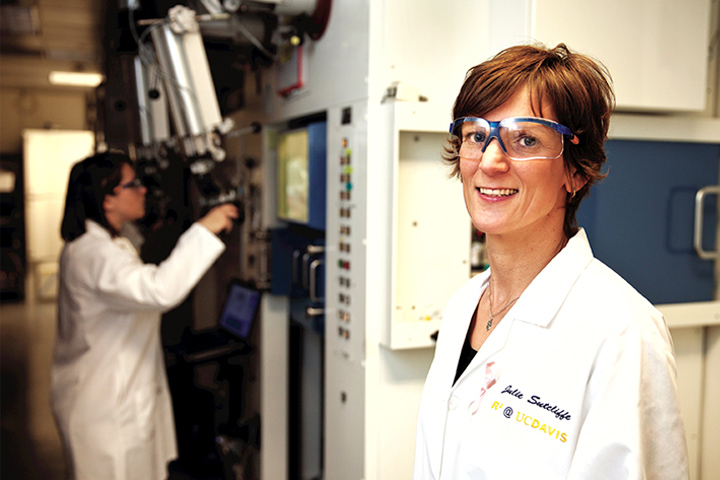
Harnessing the Power of Radionuclide Therapy
Julie Sutcliffe is working with targeted radionuclide therapy to go after pancreatic cancer cells that have spread beyond the pancreas.
2026 AACR Annual Meeting Gives Hope for the Future
Research highlights from the 2026 AACR Meeting featured advances in pancreatic cancer treatment, focusing on KRAS and vaccines,

“Off-the-Shelf” Vaccine Improves Overall and Average Relapse Survival
Dr. Zev Wainberg provides an update on the effectiveness of a vaccine, with results showing it extends the time to relapse in many patients.
A New Triple Combination for Tumors with BRCA1/2 or PALB2 Mutations
A clinical trial is comparing a two-drug combination with a three-drug combination to see which works better for genetic mutations.

Using Ultrasound to Enhance the Effectiveness of Chemotherapy
A clinical trial combines ultrasound with a microbubble contrast agent to make chemotherapy more effective.
Comparing Chemotherapy Before with Chemotherapy After Pancreatic Cancer Surgery
Researchers are comparing effectiveness of chemotherapy before surgery (neoadjuvant) with chemotherapy after surgery (adjuvant).
AACR Virtual Special Conference on Pancreatic Cancer: Day Two Highlights
Let’s Win and the Lustgarten Foundation present highlights of Day Two of the AACR Virtual Special Conference on Pancreatic Cancer.
The ABCs of Genetic Testing
There are a number of different genetic mutations that can cause familial pancreatic cancer. This article explains some of the most common ones.