Final Results of the Daraxonrasib Trial Are Unprecedented
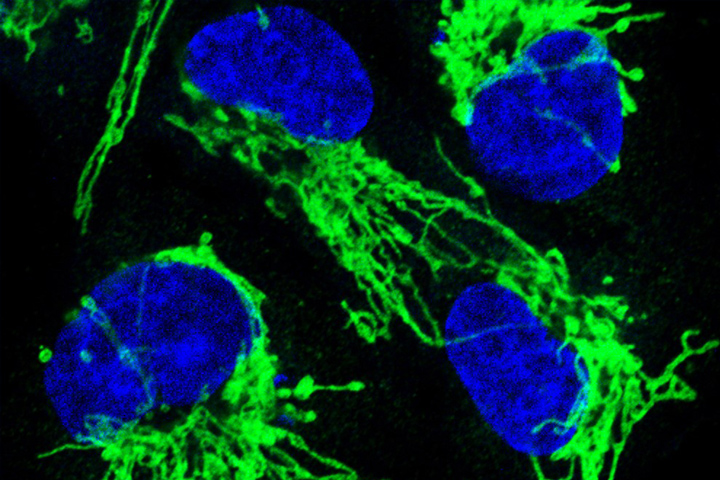
David Kashatus; National Cancer Institute / Univ. of Virginia Cancer Center
There was a well-deserved standing ovation after Revolution Medicines presented final data on the RASolute 302 clinical trial.
The report was a premier event at the 2026 ASCO Annual Meeting, held in Chicago from May 29 to June 2. The trial tested the KRAS inhibitor daraxonrasib as a second-line treatment for metastatic pancreatic cancer. Daraxonrasib is the first drug that successfully targets mutated KRAS proteins, which are responsible for fueling more than 90 percent of pancreatic cancers. KRAS was previously considered “undruggable.”
The Crowd Went Wild
Daraxonrasib has been called a game-changer, a grand slam, and a practice-shifting breakthrough that greatly improves the outlook for those with metastatic disease. Brian Wolpin, M.D., M.P.H., director of the Hale Family Center for Pancreatic Cancer Research at the Dana-Farber Cancer Institute (Boston, Massachusetts) and a member of Let’s Win’s Scientific Advisory Board, presented the findings.
Though it is not a cure, the drug, a once-a-day pill, showed statistically significant and clinically meaningful improvements in overall survival, progression-free survival, objective response rate, and patient-reported quality of life when compared with investigators’ choice of chemotherapy in patients with previously treated metastatic disease. These improvements held regardless of RAS mutation status, according to the phase III results presented, which were simultaneously published in the New England Journal of Medicine.
Wolpin believes daraxonrasib should be “a new standard of care” for previously treated metastatic pancreatic cancer. He also noted there are ongoing investigations testing the drug as a first-line treatment for metastatic patients.
The Study Details
Indeed, the final results of the RASolute 302 trial are noteworthy. Here are some of the highlights:
- In the dual primary analysis population of 228 patients with RAS G12 mutations, daraxonrasib reduced the risk of death by 60 percent versus chemotherapy.
- At a median follow-up of 8.5 months, the median overall survival was 13.2 months for daraxonrasib compared with 6.6 months for standard chemotherapy.
- The 12-month overall survival rate was 53.3 percent with daraxonrasib versus 18.7 percent with chemotherapy.
- The median progression-free survival was 7.3 months with daraxonrasib vs 3.5 months with chemotherapy.
- The six-month progression-free survival rates were 58.7 percent for daraxonrasib and 31.7 percent for chemotherapy.
- The respective overall response rates were 33.2 percent with daraxonrasib vs 11.8 percent with chemotherapy.
Patients with less common RAS mutations and those with no identified RASmutations had similar results. Among those 248 patients, daraxonrasib showed a median overall survival of 13.2 months vs 6.7 months for chemotherapy. The six-month progression-free survival rates were 56.0 percent for daraxonrasib vs 32.9 percent for chemotherapy.

As with all drugs, there are potential side effects. According to the study, all patients receiving daraxonrasib and 97.7 percent receiving chemotherapy had side effects related to treatment. The most common side effects leading to dose reduction with daraxonrasib were rash and oral swelling and sores. For the group on standard chemotherapies, side effects such as a reduced immune system, low blood platelet count, fatigue, diarrhea, and peripheral neuropathy were the most common reason for dose reduction.
However, daraxonrasib outperformed standard chemotherapies in terms of tolerability. Side effects leading to dose reductions were much less common in the daraxonrasib group, occurring in 36.1 percent of the patients versus 57.5 percent of those on chemotherapy. The most serious side effects occurred in 10.8 percent of those taking daraxonrasib versus 18.7 percent of those on chemotherapy.
Quality of life is an important issue for patients, and daraxonrasib had clear advantages over chemotherapy. Patients taking daraxonrasib had a median of 9.2 months before experiencing a significant increase in pain. , compared to 3.8 months with chemotherapy. And overall positive quality of life was doubled: 5.7 months for daraxonrasib vs 2.6 months for chemotherapy.
Getting Daraxonrasib Right Now
Let’s Win has covered daraxonrasib extensively, including providing important information on how you can work with your doctor to potentially access the drug through the FDA’s Expanded Access Program, at no cost. Daraxonrasib is still considered experimental, but considerable efforts are underway to obtain FDA approval. In the interim, the Expanded Access Program pathway allows patients with serious or life-threatening conditions to access investigational treatments outside of a clinical trial. The drug is already being sent to treatment providers.
Recent Stories

Confirming the Link Between New-Onset Diabetes and Pancreatic Cancer
Let’s Talk About Rasonque: a Q&A for Our Community